
এক সাধু বনের এক কোণে কুটির বেঁধে খুব কঠোর তপস্যা করছিলেন। রোজ সকালে সাধু বনের পাশেই নদীতে স্নান করে ভেজা কৌপীন শুখোতে দিয়ে অন্য একমাত্র শুখনো কৌপীনটা পরে কাছের গ্রামে ভিক্ষা করতে বেরোতেন।
একদিন ফিরে এসে দেখেন যে শুখোতে দেওয়া কৌপীনটা ইঁদুরে কেটে ফেলেছে।
সাধু কী আর করবেন, আবার গ্রামে গিয়ে চেয়ে চিন্তে গ্রামবাসীদের কাছ থেকে আরেকটা কৌপীনের কাপড় ভিক্ষা করে আনলেন।
পরদিন আবার যত্ন করে কৌপীন শুখোতে দিয়ে ভিক্ষায় বের হলেন। ফিরে এসে দেখেন যে এই কৌপীনটাও ইঁদুরে কেটে ফেলেছে। আবার সাধু গ্রামে গিয়ে আর একখানা চেয়ে আনলেন। এভাবে চললো কিছুদিন। কিন্তু রোজ রোজ তাঁকে কৌপীনের জন্য কাপড় কে দেবে?
গ্রামের একজন বুদ্ধি দিল, মহারাজ, আমার বাড়ীতে বিড়ালের বাচ্চা আছে, একটা নিয়ে যান। ইঁদুর আর উৎপাত করবে না। সাধু ভেবে দেখলেন যে রোজ রোজ এভাবে কৌপীন ভিক্ষা করার চাইতে একটা বিড়াল ছানা নিয়ে যাওয়াই বুদ্ধিমানের কাজ। সাধু তাই বিড়াল নিয়ে নিজ কুটীরে ফিরে গেলেন ।
পরদিন ভিক্ষের (মাধুকরীর) পর ফিরে দেখলেন যে তাঁর কৌপীন ঠিক আছে। কিন্তু একটা সমস্যার সমাধান হলে কী হবে, একটা নতুন সমস্যা শুরু হল। দুধ ছাড়া বিড়াল-ছানার আহারই হয় না। কাজেই একান্ত বাধ্য হয়ে সন্ন্যাসীকে অন্নের সাথে সাথে দুধ ভিক্ষা করাও শুরু করতে হোল।
গ্রামের এক ভক্ত সাধুকে পরামর্শ দিল এই বলে: মহারাজ, আমার অনেকগুলো গাই আছে। একটা ভালো গাই আপনি নিয়ে যান। আপনারও দুধ খাওয়া হবে, বিড়ালেরও হবে। সন্ন্যাসী ভেবে দেখলেন যে তাঁর কুটীরের আশেপাশে অফুরন্ত ঘাস রয়েছে, গরুর খাদ্যের অভাব কোনদিনও হবে না। বাছুর সহ একটা গরু সন্ন্যাসী নিয়েই এলেন।
গাইটা বড়ই লক্ষ্মী। সের পাঁচেক দুধ দেয়। পাঁচ সের দুধতো অনেক বেশী। তাছাড়া গাইয়ের জন্য একখানা গোয়াল ঘরও প্রয়োজন। বনে খড় ও বাঁশের কোন অভাব নেই, কয়েকজন মজুর হলেই হল। সন্ন্যাসীর মাথাতেই বুদ্ধিটা এলো । অতিরিক্ত দুধ বিক্রি করেই তো কিছু পয়সা আসতে পারে যা দিয়ে মজুরের মজুরী দেওয়া যাবে। তাই হল। অতিরিক্ত দুধ বিক্রি করে পয়সা এলো, আর সে পয়সায় মজুর এলো। কয়েকদিনের মধ্যেই গোশালা তৈরি হয়ে গেলো।
এদিকে সন্ন্যাসীর সাধন-ভজন-তপস্যা আগের চাইতে অনেক কমে গেছে। তিনি সময়ই পান না। তাই তপস্যার সময় বের করার জন্য তিনি একটা কাজের ছেলে রেখে নিলেন, দুধ বিক্রি করা টাকায় তার মাইনেও দেওয়া হতে থাকলো।
ছেলেটার নাম রামচরণ। সে খুবই কর্মঠ, ভালো এবং বিশ্বস্ত ছেলে। সব কাজ করার পরও রামচরণ তুলসী গাছ, গাঁদা, সূর্যমুখী, ইত্যাদি ফুল গাছ লাগিয়েছিল, তাতে ফুলও ফুটেছে অনেক। ছেলেটাকে সন্ন্যাসীর খুবই পছন্দ। রামচরণ সন্ন্যাসীকে পরামর্শ দিল যে সেখানকার জমি খুবই উর্বর, তাই শাক-সব্জীর বাগান করলে খুব ভালো হয়। করলোও তাই।
এদিকে সাধুর কুটীরখানার অবস্থা জীর্ণ হয়ে পড়েছিল। রামচরণ জোর করায় সন্ন্যাসীকে কুঁড়ে ঘরের পরিবর্তে ইটের পাকা বাড়ি বানাবার সম্মতি দিতে হলো। রামচরণের উৎসাহ দেখে সন্ন্যাসী তাকে এক জোড়া বলদ কিনে দিলেন। সে কিছু জমিকে ধেনো জমিতে পরিবর্তিত করে ধান চাষও শুরু করে দিলো। অবশ্য আরও কয়েকজন কাজের লোককে নিযুক্ত করতে হল।
সাধুর জন্য যে পাকা বাড়ি তৈরি হয়েছিল সেটা রামচরণের বুদ্ধিতে তিনি কাজের লোকেদের ছেড়ে দিলেন। তাঁর জন্য রামচরণ মস্ত বড় পাকা বাড়ি বানিয়ে দিল। সামনে পুকুর কাটা হল, তাতে মাছ ছাড়া হল। বাড়ির চারদিকে পাঁচিল উঠলো। সন্ন্যাসী তখন আর সাধু রইলেন না। তিনি হয়ে গেছেন মহাজন, বিষয়ী।
হঠাৎ একদিন সন্ন্যাসীর গুরুদেব শিষ্যের খোঁজে এসে হাজির হলেন। তিনি তো সব দেখে অবাক। শিষ্যের অবস্থা গুরু সবই বুঝতে পারলেন। দূর থেকে গুরুদেবকে দেখে সন্যাসী দৌড়ে এসে প্রণাম করলেন। বাড়ি ঘরের দিকে হাত দিয়ে দেখিয়ে গুরুদেব শিষ্যকে জিজ্ঞাসা করলেন, এ সব কী?
শিষ্য করজোড়ে উত্তর দিলেন: গুরুদেব, এ সব যা দেখছেন সবই এক কৌপীনকা ওয়াস্তে। অর্থাৎ, একটা কৌপীনের জন্য।
গুরুর দর্শনে শিষ্যের মনে আবার জ্ঞানের উদয় হল। তিনি বুঝতে পারলেন যে ভুল পথে যাচ্ছিলেন। বাড়িঘর সব ছেড়ে তিনি তখনই গুরুর সঙ্গে হিমালয়ে তপস্যায় চলে গেলেন।
কাহিনীটার নীতিবাক্য সহজবোধ্য। তপস্যার জন্য কঠোর আত্মসংযম ও কৃচ্ছ্রসাধন অপরিহার্য।
বিশেষ দ্রষ্টব্য:
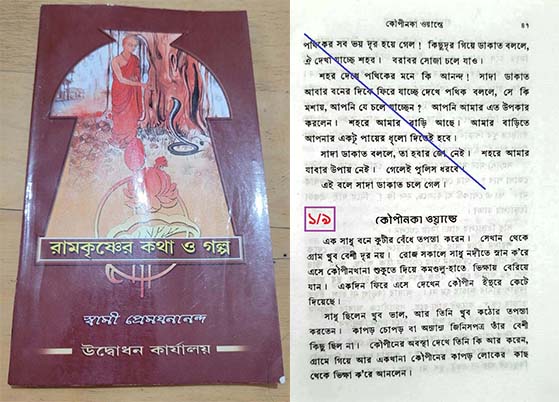
এই গল্পটা শ্রী শ্রী রামকৃষ্ণ পরহংসদেব বলেছিলেন। উদ্বোধন কার্যালয় প্রকাশিত স্বামী প্রেমঘনানন্দ সম্পাদিত “রামকৃষ্ণের কথা ও গল্প” বইতে এটা আছে। এই লেখাটা সেখান থেকেই সংক্ষিপ্তকারে পুনর্লিখিত হল। — উৎপল আইচ
KOUPIN KA WASTEY : Sri Sri Ramakrishna Paramahansadev, Translate by UTPAL AICH
A hermit had built a hut in a corner of the forest and was doing very severe penance. Every morning the Sannyasi took bath in the river next to the forest and left the wet Kaupin (loincloth) to dry before leaving for the nearby village to beg.
One day he returned to his hut and discovered that the Kaupin he left for drying had been damaged by rodents.
The Sadhu went back to the village and obtained another piece of cloth by begging from the villagers.
The next day, he again left his wet Kaupin to dry off and went out for begging. When he came back, he saw that this Kaupin had also been ruined by rats. Again, the hermit went to the village and fetched another Kaupin. This went on for a few days. But who would give him cloth every day?
A villager advised, Maharaj, I have kittens in my house; please take one. The mice will no longer damage your Kaupin. The saint thought that it would be wiser to take a kitten instead of begging piece of cloth every day. So the Sannyasi went back to his hut with the cat.
The next day after begging alms (Madhukari) he returned to see that his Kaupin was intact. But when one problem was solved, a new problem started. The cat refused to eat any food other than milk. So the hermit had to start begging for alms as well as for milk for the cat.
A village devotee advised the saint saying: Maharaj, I have many cows. Take a good cow. You will have milk, and so will the cat. The monk thought that since there was endless grass around his cottage, the cows would never lack fodder. The Sannyasi returned to his hut with a cow with a calf.
The cow was very docile. It gave five litres of milk. Five litres of milk were too much for the Sannyasi. Besides, a cow shed was also needed for the cows. There was no shortage of straw and bamboo in the forest. Only a few labourers were needed. The idea came to the mind of the Sannyasi that by selling the extra milk, some money could be earned with which he could easily pay the wages of the labourers. So it happened. Money came by selling extra milk and labour came with that money. Within a few days, a Goshala (cow shed) was built.
The Sannyasi had to spend lots of time on the cows and his time for meditation and penance had drastically decreased. He felt uneasy. So to get more time for penance, he hired a boy servant. He could afford to pay the boy servant from the money he saved by selling the extra milk.
The boy’s name was Ramcharan. He was hardworking as well as very obedient and trustworthy. Even after doing all his work, Ramcharan planted Tulsi saplings, Marigold, Sunflower, etc., and many flowers bloomed in front of the Sannyasi’s hut. The hermit liked the boy very much. Ramcharan suggested to the Sannyasi that since the land was very fertile, he should start growing vegetables by converting part of the area into a garden and he very soon did exactly that.
The saint’s cottage was then in a dilapidated condition. Ramcharan forced the saint to agree to build a small brick house instead. Seeing Ramcharan’s enthusiasm, the monk had bought him a pair of oxen. Ramcharan also started paddy cultivation by converting some land into a paddy field. He had to hire few more workers.
On the advice of Ramcharan, the Sadhu vacated the small brick house which was built for him for the use of the newly hired servants. Ramcharan built a big brick house for the Sannyasi. A pond was dug out in front, and some fishes were released into that pond. A brick-wall was constructed around the house. The Sannyasi was no longer a hermit now. He had become a worldly person, a moneyed man.
All of a sudden, one day, the Sannyasi’s Gurudev turned up looking for his disciple. He was surprised to see everything. The Guru understood everything about his disciple’s condition. Seeing his Gurudev from a distance, the monk came running and paid his obeisance to the Guru by bowing down. Pointing his hand towards the house, the Gurudev asked the disciple, what is all this?
The disciple replied: Gurudev, all these you are seeing were only for a Kaupink (loincloth)!
After Guru-darshan, the disciple’s inner mind was again awakened and he came to his senses. He realized that he had strayed away from the path of tapasya or penance. He immediately left the place and went for penance following his Guru to the Himalayas.
MORAL
The moral of the story is self-evident. Strict self-restraint and austerity are essential for any kind of tapasya or penance for achieving the pinnacle of success in any field.
NOTA BENE :
This parable was told by Sri Sri Ramakrishna Paramahansadev. It has been translated in an abridged form, from the Bengali book “Ramakrishner Katha and Galpo” edited by Swami Premaghanananda; published by the Udbodhan Office.
Abridged and translated by UTPAL AICH