
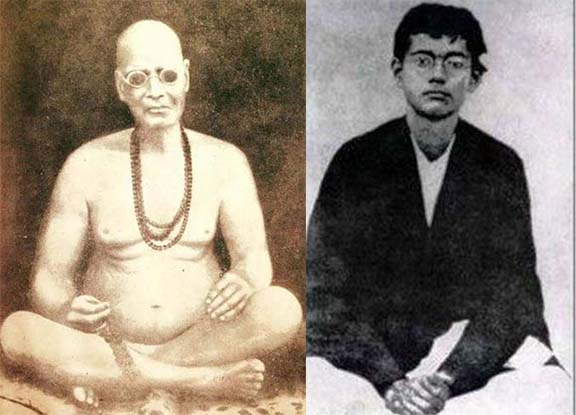
প্রথম ও দ্বিতীয় পর্বে স্বামী প্রেমানন্দ গিরি লিখিত ‘সুভাষচন্দ্র ও স্বামী ভোলানন্দ গিরি মহারাজ’ শিরোনামের প্রবন্ধটার অংশবিশেষ উদ্ধৃতিসহ আলোচনা করা হয়েছে। এই পর্বে সেই প্রবন্ধের অবশিষ্ট অংশ উদ্ধৃত করা হবে। স্বামী শ্রীশ্রী ভোলানন্দ গিরি মহারাজের শিষ্য স্বামী প্রেমানন্দ গিরি সেই প্রবন্ধে আরও লিখেছেনঃ —
“কংগ্রেসের অধিবেশনের কিছুদিন পরে — ওয়েলিংটন স্কোয়ারে হিন্দু মিশনের প্রতিষ্ঠাতা স্বামী সত্যানন্দজীর নেতৃত্বে বিরাট হিন্দু সমাজ সম্মেলনে সুভাষচন্দ্রের সঙ্গে শ্রীশ্রী ভোলানাথ গিরির সাক্ষাৎকার ঘটে। আমরা মহারাজের সঙ্গে গিয়েছিলাম। মহামহোপাধ্যায় প্রমথনাথ তর্কভূষণ মহাশয় সভাপতি। সুভাষচন্দ্র এসে মহারাজকে প্রণাম করিলেন। মহারাজ আশীর্বাদ করিয়া বলিলেন — “তুমি কেবল সাবাস্ সুভাষ নহ — তোমার প্রস্তাব আমি শুনিয়াছি। তোমার ভাষা স্থিতপ্রজ্ঞেরই ভাষা। — তুমি যথার্থ সু + ভাষ। সুভাষচন্দ্রের মহারাজের প্রতি যে শ্রদ্ধা ছিল তাহার কারণ বোধ হয় সুভাষচন্দ্র জানিতেন যে স্বামীজী বাঘাযতীনের গুরু। ‘আত্মার জন্ম মৃত্যু নাই’ এইরূপ শিক্ষা স্বামীজী হইতে লাভ করিয়া বাঘা যতীন বীর্যবন্ত হইয়া স্বাধীনতার জন্য সংগ্রাম করিয়া বীরগতি লাভ করিয়াছিলেন।”
উপসংহার
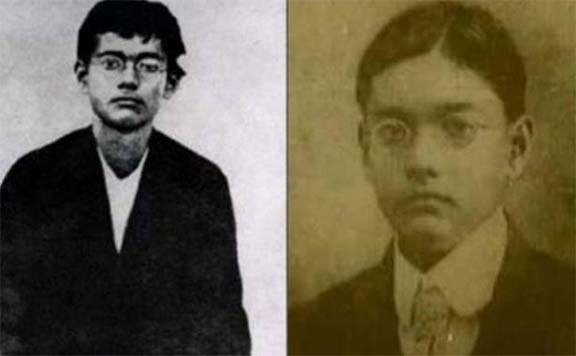
স্বামী প্রেমানন্দ গিরির এই প্রবন্ধ থেকে আমরা জানতে পারি যে সুভাষচন্দ্র বসু অন্ততঃ দুইবার শ্রীমৎ স্বামী ভোলানন্দ গিরি মহারাজজীর সাক্ষাৎলাভ করেছিলেন। প্রথমবার যখন স্কুলে পড়েন — ১৯১১ কিংবা ১৯১২ খ্রিস্টাব্দে — এবং পরের বার ১৯২৯ খ্রিস্টাব্দের শুরুতে, কলকাতা কংগ্রেসের কিছুদিন পর।
বিশেষ দ্রষ্টব্যঃ —
১) দ্বিতীয় পর্বে ১৯২৮ খ্রিস্টাব্দের ৩১ ডিসেম্বর তারিখে এ-আই-সি-সি-র (কলকাতা-কংগ্রেসের) অধিবেশনে গান্ধীজির ডোমিনিয়ন স্ট্যাটাসের প্রস্তাবের বিরুদ্ধে সুভাষচন্দ্রের আনা সংশোধনী প্রস্তাব ভোটে হেরে যাবার কথা যৎসামান্য বলা হয়েছে। উপরে আমরা লক্ষ্য করেছি যে স্বামী ভোলানন্দ গিরি মহারাজ সে প্রসঙ্গ টেনে এনে ১৯২৯ খ্রিস্টাব্দের শুরুতে সুভাষচন্দ্রের ভূয়সী প্রশংসা করেছেন। সুভাষচন্দ্র বসুর সাথে স্বামী ভোলানন্দ গিরি মহারাজের সেই সাক্ষাতের মাত্র কয়েক মাস পরেই ৮ই মে ১৯২৯, তারিখে মহারাজের মহাপ্রয়াণ হয়। সুভাষচন্দ্রের আনা এই সংশোধনী প্রস্তাবটা ভারতবর্ষের স্বাধীনতা সংগ্রামের ইতিহাসের একটা গুরুত্বপূর্ণ অধ্যায় এবং তাই এটা আরও বিশদে আলোচনার দাবী রাখে।
সেদিন যে সুভাষচন্দ্রের সেই সংশোধনী প্রস্তাব ৯৭৩/১৩৫০ ভোটে পরাজিত হয়েছিল সেকথা অনেক ঐতিহাসিকই লিখেছেন। কিন্তু যা তারা লেখেননি তা হচ্ছেঃ — “কংগ্রেস পূর্ণ স্বাধীনতার কমে কিছুতেই সন্তুষ্ট হবে না, এরকম একটা এই সংশোধনী প্রস্তাব – যা কিনা ব্রিটিশের সাথে সমস্ত সংযোগ বিচ্ছিন্ন করাকে নির্দেশ করে — তা লেখক দ্বারা প্রস্তাবিত হয়েছিল। কিন্তু এই ভোট গ্রহণকে অবাধ ও নিরপেক্ষ বলা যেতে পারে না, কারণ মহাত্মার অনুসারীরা এটিকে আস্থার প্রশ্নে পরিণত করেছিল এবং ঘোষণা করেছিল যে মহাত্মা পরাজিত হলে তিনি কংগ্রেস থেকে অবসর নেবেন। তাই তার রেজোলিউশনের পক্ষে অনেক লোক (delegate) ভোট দিয়েছেন (এ প্রস্তাবে) তাদের নিজেদের প্রত্যয় থেকে নয়, কিন্তু তারা মহাত্মাকে কংগ্রেস থেকে বের করে দেওয়ার দলে সামিল হতে চাননি বলে।” [এটা আমি উদ্ধৃত করেছি সুভাষচন্দ্র বসুর “দী ইন্ডিয়ান স্ট্রাগল” বই থেকে। অনুবাদটা আমার করা। পাঠকের কাছে অনুরোধ রইলো মূল ইংরেজি অংশটা পড়ে দেখার।]
একথা সুভাষচন্দ্র আগেও বহুবার বলেছেন। যেমন অধিবেশন শেষ হবার পর ৫ জানুয়ারি ১৯২৯ তারিখে অ্যাসোসিয়েটেড প্রেসের প্রতিনিধির সাথে সাক্ষাৎকারে সুভাষচন্দ্র বলেছিলেন, “এবার কংগ্রেসের যে প্রস্তাব গৃহীত হইয়াছে তাহা মাদ্রাজ কংগ্রেসে সগর্ব–উত্তোলিত পতাকাকে নত করিয়াছে বলিয়া আমার বিশ্বাস। দুঃখের বিষয় এবারকার ভোট স্বাধীনতা বনান ঔপনিবেশিক স্বায়ত্ত শাসনের উপর হয় নাই। মূল প্রস্তাবের পক্ষে যাঁহারা ভোট দিয়াছিলেন তাঁহাদের অধিকাংশই প্রস্তাবের উদ্দেশ্যের প্রতি লক্ষ্য রাখিয়া ভোট দেন নাই, ততোধিক দিয়াছেন মহাত্মা গান্ধী ও পণ্ডিত মতিলালের প্রতি দৃষ্টি রাখিয়া। বাস্তবিক মহাত্মা গান্ধীর আবির্ভাব বিষয়টিকে জটিল করিয়া তুলিয়াছিল। / যাঁহারা সংশোধক প্রস্তাবের বিরুদ্ধে ভোট দিয়াছিলেন, তাঁহারা প্রকৃতপক্ষে বয়োবৃদ্ধ নেতৃবৃন্দকে কংগ্রেস হইতে দূরে সরাইয়া দিবার ভয়ে তাঁহাদের পক্ষে ভোট দিয়াছিলেন। নেতৃবৃন্দের বিপক্ষে দিলে তাঁহাদের দূরে সরিয়া যাইবার সম্ভাবনা যথেষ্ট ছিল, এই প্রকার আশঙ্কার সম্মুখীন হইতে তাঁহারা রাজী হন নাই। / সকল নেতাই সংশোধন প্রস্তাবের সম্পূর্ণ বিরোধী ছিলেন। তাহা সত্ত্বেও যখন দেখি যে আমার পক্ষে ৯৭৩ জন ভোট দিয়াছেন তখন আমার মনে হয় আমাদের নৈতিক জয় হইয়াছে। / … / … যাঁহারা মূল প্রস্তাবের পক্ষে ভোট দিয়াছেন তাহাঁরা যে কী ভুল করিয়াছেন এবং তাহাতে তাঁহাদের কোন লাভই যে হয় নাই তাহা তাঁহারা অনতিবিলম্বে হৃদয়ঙ্গম করিতে পারিবেন। তরুণদের মতে এই প্রস্তাব স্বাধীনতা পতাকার গৌরবহানি করিয়াছে।” [সুভাষ-রচনাবলী ২য় খণ্ড, জয়শ্রী প্রকাশন, দ্বিতীয় মুদ্রণ ১৯৮৭]
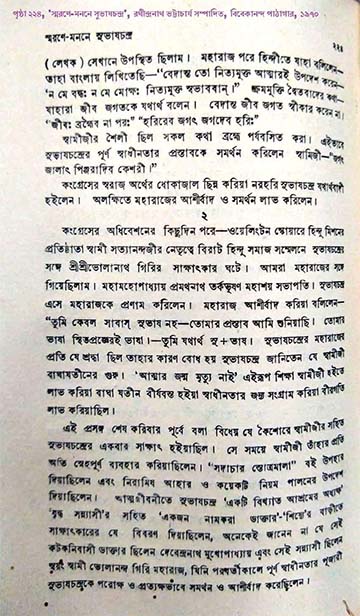
বিপ্লবী সুনীল দাস লিখেছেন, “গান্ধী চাইলেন আপস — ‘ডোমিনিয়ন স্ট্যাটাস’ — সুভাষচন্দ্র চাইলেন জাতীয় সংগ্রামের বৈপ্লবিক পরিণতি ব্রিটিশ সম্পর্কছিন্ন ‘পূর্ণ স্বাধীনতা’। জাতীয় সংগ্রামের বৈকল্পিক রূপান্তরের বেগবান দাবি উত্থাপন ক’রে সুভাষচন্দ্র সেদিন গান্ধীজীর বিকল্প নূতন নেতৃত্ব নিয়ে জাতীয় সংগ্রামের পটভূমিকায় আবির্ভূত হলেনঃ ‘ডোমিনিয়ন স্ট্যাটাস’, না ‘সকল প্রকার ব্রিটিশ সম্পর্কছিন্ন পূর্ণ স্বাধীনতা’, আপস না বৈপ্লবিক সংগ্রাম — সেদিন থেকে পরিখার দুই পাশে পরস্পর দুই প্রতিদ্বন্দ্বী শিবির ধীরে ধীরে গড়ে উঠেছে।”
সেদিনই প্রথমবার ভারতবর্ষের জাতীয় জীবনে সুভাষচন্দ্র বসু মোহনদাস করমচাঁদ গান্ধী ওরফে মহাত্মা গান্ধীর বিকল্প নেতৃত্বের মর্যাদায় প্রথম প্রতিষ্ঠিত হয়েছিলেন। এই কারণেই এই ঘটনাটাকে ভারতবর্ষের স্বাধীনতা সংগ্রামের ইতিহাসের একটা গুরুত্বপূর্ণ অধ্যায় বলে আমার মত অনেকেই মনে করেন।
২) প্রবন্ধটার পুরানো বানান অপরিবর্তিত রাখা হয়েছে।
ENGLISH VERSION
SUBHAS CHANDRA BOSE AND SRIMAT SWAMI BHOLANANDA GIRI MAHARA (CONCLUDING PART)
In the first and second parts, the article titled ‘Subhas Chandra and Swami Bholananda Giri Maharaj’ written by Swami Premananda Giri in Bengali was discussed after quoting the translated text of some portions of the article. In this part, the translations of the remainder of that article will be quoted. Swami Premananda Giri, a disciple of Swami Sri Sri Bholananda Giri Maharaj, also wrote the following:-
“A few days after the Congress session — Sri Sri Bholanath Giri met Subhas Chandra at the Great Hindu Samaj Conference organized under the leadership of Swami Satyanandaji, the founder of the Hindu Mission, at Wellington Square (Calcutta). We went along with Maharaj-jee. Mahamohopadhyay Pramathnath Tarkabhushan presided over the meeting. Subhas Chandra came and bowed down to pay obeisance to Maharaj-jee. Maharaj blessed him and said — “You are not only Saabas (Bhavo!) Subhas — I have heard your proposal. Your language is the language of a Sthitaprajya [A Sanskrit word. Bhagavad Gita refers to the term as someone who possesses steadfast wisdom.] — You have been rightly christened as Su + Bhas! Subhaschandra’s respect for Maharaj-jee seems to be due to the fact that Swamiji was the guru of Baghajatin [the famous revolutionary who sacrificed his life while fighting the British]. After receiving such teaching from Swamiji that the ‘soul has neither birth nor death’, Bagha Jatin fought bravely for freedom and achieved martyrdom and immortality.”
CONCLUSION
From this write-up of Swami Premananda Giri, we learn that Subhas Chandra Bose met Srimat Swami Bholananda Giri Maharaj-jee at least twice. The first time was when he was in school – during 1911 or 1912 — and the next time in early 1929, shortly after the Calcutta Congress session.
SPECIAL NOTE
In the second part, it was passingly stated that Subhas Chandra Bose’s amendment motion against Gandhiji’s Dominion Status resolution was defeated in the A.I.C.C. session (Calcutta-Congress) on December 31, 1928. We have observed that Swami Bholananda Giri Maharaj praised Subhas Chandra profusely by drawing that context when they met in the beginning of 1929. Swami Bholananda Giri breathed his last on May 8, 1929, only after a few months of that meeting. This amendment motion of Subhas Chandra Bose is an important episode in the history of India’s freedom struggle and therefore it deserves to be discussed in more details.
Many historians have written that Subhas Chandra Bose’s amendment proposal was defeated on that day by 973 to 1350. But what they didn’t write was: — “An amendment to the effect that the Congress would be content with nothing short of independence, which implied severance of the British connection, was moved by the writer … The amendment was lost by 973 votes to 1350 – but the vote could hardly be called a free one, as the followers of the Mahatma made it a question of confidence and gave out that if the Mahatma was defeated, he would retire from the Congress. Many people therefore voted for his resolution not out of conviction, but because they did not want to be a party to forcing the Mahatma out of the Congress.” [“The Indian Struggle” by Subhas Chandra Bose, Oxford India Paperbacks, Thirteenth Impression, 2014.]
Subhas Chandra had said this many times earlier too. For example, Subhas Chandra said in an interview with a representative of the Associated Press on January 5, 1929, a few days after the end of the Congress session, “I believe that the resolution adopted by the Congress this time has lowered the proudly-raised flag of the Madras Congress. Unfortunately, this year’s vote was not about colonial autonomy. Most of those who voted in favour of the original motion, did not vote, keeping in mind the purpose of the motion; instead they voted more for the personality of Mahatma Gandhi and Pandit Motilal. In fact, the advent of Mahatma Gandhi complicated the matter. / Those who had voted against the amendment had voted in fear of alienating the aged leaders from the Congress Party. They were not willing to face such an eventuality that their votes might cause the withdrawal of these elderly leaders from the Congress Party. / All the leaders were totally opposed to the amendment motion. Nevertheless, when I see that 973 people have voted for me, I feel that we have won a moral victory. / … / … Those who voted in favour of the original proposal will be heartbroken over what is the wrong they did and how they got nothing out of it. According to the youth, this proposal has reduced the glory of the flag of freedom.” [Translated version from Subhas-Rachanavali Volume 2, Jayashree Prakashan, Second Impression, 1987]
Revolutionary Sunil Das has written, “Gandhi wanted a compromise — ‘Dominion Status’ — Subhas Chandra, on the contrary, wanted the revolutionary method of the national struggle for ‘complete independence’ free from any British ties. Subhas Chandra emerged in the background of the national struggle as Gandhiji’s alternative as a new leadership, raising the urgent demand for an alternative formulation of the national struggle: not ‘Dominion status’, but ‘complete independence, free from all British ties’. The choice was between ‘compromise’ and ‘revolutionary struggle’. Since that day, two rival groups started slowly regrouping on either side.”
On that day, for the first time in the history of India’s independence struggle, Subhas Chandra Bose first appeared as the alternative leadership of Mohandas Karamchand Gandhi alias Mahatma Gandhi. That is why many people like me believe that the session of the Calcutta Congress on December 31, 1928, was an extremely important day in the history of India’s freedom struggle.